국가건강검진 vs Comprehensive Health Screening: 2026 Cost and Test Comparison


Key Summary
Compare 국가건강검진 eligibility, costs, basic tests, private screening options, booking steps, and preparation in Korea for 2026.
Contents
국가건강검진 provides free or low-cost access to essential health checks, but it covers significantly fewer tests than a private comprehensive health screening. In 2026, the right choice depends on your eligibility, medical history, symptoms, age-related risks, and whether you need basic preventive screening or a more detailed investigation.
Table of Contents
- 2026년 국가건강검진 대상자는 누구인가요?
- 국가건강검진 기본 항목은 무엇인가요?
- 국가건강검진 비용은 얼마인가요?
- 종합건강검진과 국가건강검진의 차이점은?
- 국가건강검진 예약 방법과 준비물
- Frequently Asked Questions
2026년 국가건강검진 대상자는 누구인가요?
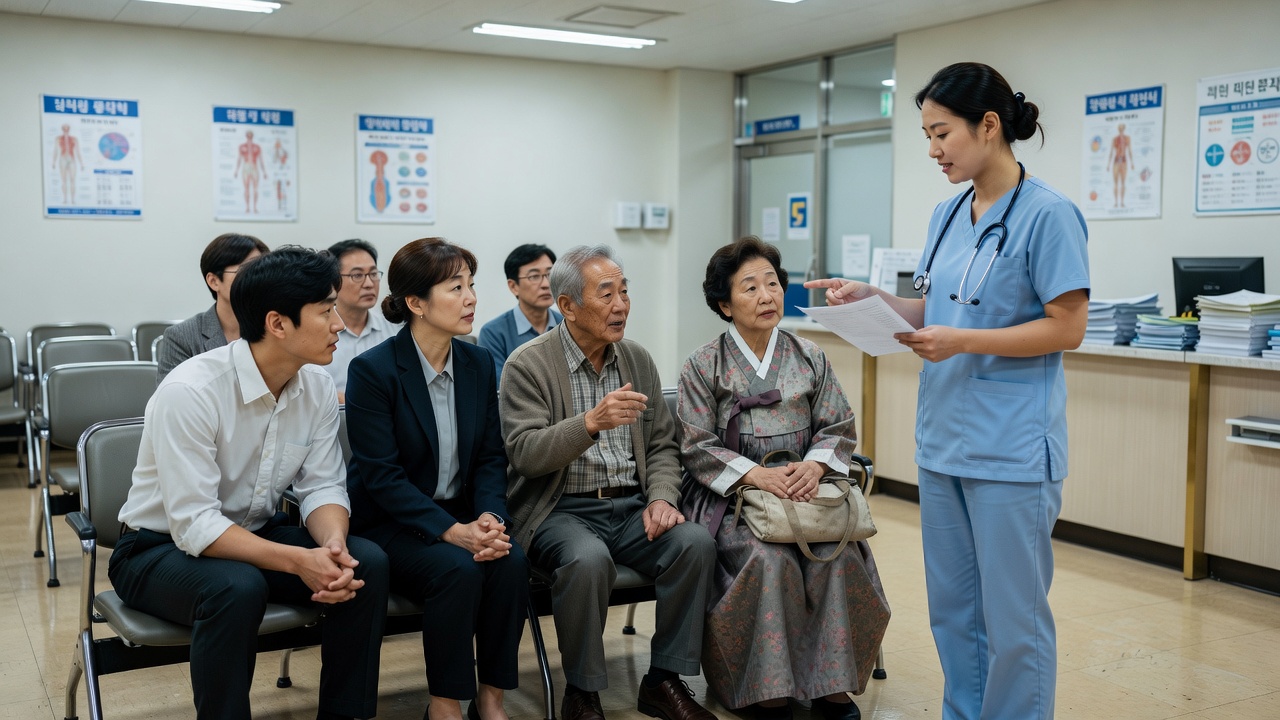
In 2026, eligibility for Korea’s national health screening program depends mainly on National Health Insurance status, age, employment status, and the applicable screening cycle. Eligible groups generally include regional insurance household heads, workplace-insured employees, and household members or dependents aged 20 years or older, according to the Korea Association of Health Promotion.
These broad categories do not mean that every person receives exactly the same tests in the same year. A person’s screening notice may differ depending on sex, age, previous examinations, insurance classification, and eligibility for age-specific or cancer-screening programs.
You should therefore confirm your personal eligibility rather than relying only on your birth year or a family member’s experience. Practical verification methods include:
- Reviewing the health-screening notice issued through the National Health Insurance system
- Checking your current eligibility through the official insurance service
- Contacting an authorized screening institution and asking it to verify your status
- Confirming whether your workplace manages employee screening separately
- Asking which general, age-specific, and cancer-screening items appear on your notice
Search behavior also shows strong interest in free examinations, appointments, and costs for 2026, according to Google search results for 국가건강검진. This reflects a common source of confusion: being eligible for the general program does not automatically make every optional examination free.
Eligibility is also different from medical necessity. Someone who is not due for routine screening may still require diagnostic testing because of symptoms or an abnormal previous result. Conversely, a person eligible for routine screening should not assume that the standard package can detect or rule out every disease.
For example, an eligible person may complete all standard measurements and receive no major warning. That does not eliminate the need for medical assessment of persistent abdominal pain, unexplained weight loss, a new lump, or recurring shortness of breath. Screening is intended for people without a known diagnosis or urgent complaint; diagnostic care investigates a specific clinical concern.
For English-speaking residents, language support is another practical consideration. Before making an appointment, ask whether the institution provides English instructions, translated questionnaires, consent assistance, or an English explanation of the results. Even when a translated report is available, technical terms may need interpretation in the context of your history, medication use, and previous results.
If your eligibility cannot be confirmed immediately, do not purchase a private package solely because it is easier to book. First ask the screening center to distinguish between your covered entitlement and its commercial options. This simple step can prevent duplicate testing and unnecessary personal expense.
국가건강검진 기본 항목은 무엇인가요?
The standard 국가건강검진 package focuses on common health indicators and major risk signals. It is designed as a broad preventive check, not as an exhaustive diagnostic investigation.
The basic items include height, weight, blood pressure, chest X-ray, and blood testing, according to Hanam Wellness Center’s 2026 screening guidance. Depending on the person’s eligibility and the applicable program, the visit may also involve a medical questionnaire, physical measurements, urine testing, or additional age- and sex-related items.
The following table explains the general purpose of the core items without treating any single result as a diagnosis.
| Basic item | What it generally evaluates | What an unusual result may lead to |
|---|---|---|
| Height and weight | Body-size measurements used in general health assessment | Review of weight trends, diet, activity, or metabolic risk |
| Blood pressure | Cardiovascular and hypertension-related risk | Repeat measurements or clinical evaluation |
| Chest X-ray | Visible abnormalities in the chest area | Comparison with prior imaging or further examination |
| Blood tests | Selected metabolic and organ-related indicators | Repeat bloodwork, medical consultation, or targeted tests |
| Health questionnaire | Symptoms, habits, and relevant history | Personalized counseling or follow-up recommendations |
A screening result marked “abnormal” does not necessarily establish that a disease is present. Blood pressure can vary with stress, recent activity, and the measurement environment. Blood results may also be influenced by fasting status, medication, alcohol use, acute illness, and other temporary factors.
Likewise, a result within the reference range is not a universal guarantee of good health. Reference intervals are population-based tools. The meaning of a result can change when it is considered alongside earlier values, family history, symptoms, medication use, or findings from other examinations.
Research shows that screening is most useful when results lead to appropriate follow-up rather than being filed away after the examination. When reviewing a report, consider asking:
- Which results fall outside the institution’s reference range?
- Are any values close to a decision threshold even if they are not flagged?
- Has a value changed meaningfully since the previous examination?
- Could medication, fasting, illness, alcohol, or lifestyle have affected it?
- Is a repeat test or specialist consultation recommended?
- How soon should the recommended follow-up occur?
The distinction between a reference range and a treatment threshold is important. A laboratory flag usually means that a value sits outside that laboratory’s stated interval. It does not automatically indicate the severity of a condition, identify its cause, or determine which treatment is appropriate.
Results should also be reviewed together. For instance, an isolated blood-test change may have several possible explanations. Its significance can look different when related measurements, previous trends, current symptoms, and medication history are considered. This is why data-based interpretation should go beyond translating a red mark or an “H” or “L” symbol.
The national program is particularly useful for establishing a consistent baseline. If you undergo 국가건강검진 at regular intervals, retain copies of your reports. A trend across 2 or more screening rounds may provide more context than an isolated value viewed without any history.
When comparing reports, check that the measurement names, units, and reference intervals are comparable. A value reported in one unit should not be placed directly beside a value expressed in another unit without conversion. Reference intervals may also vary between laboratories, so the printed interpretation should be read alongside the number.
Routine screening is not a substitute for prompt medical care. New chest pain, severe breathing difficulty, sudden weakness, significant bleeding, or another urgent symptom should be assessed medically without waiting for the next screening appointment.
국가건강검진 비용은 얼마인가요?
The general answer is that 국가건강검진 is commonly provided without an individual copayment, while some applicable examinations may involve a 10% cost share. The program is generally offered on a 2-year screening interval, according to the provided comparison source from Hanaromf.
Those figures should not be interpreted as a promise that every available test is free. The amount payable depends on whether the item belongs to the covered program, whether the person is eligible for it, and whether the patient requests optional services outside the program.
A screening institution may offer add-ons such as advanced imaging, additional blood markers, endoscopic procedures, sedation, or specialized packages. These services are not automatically included merely because they are performed during the same visit.
| Cost category | Typical payment approach | What to confirm |
|---|---|---|
| Eligible general national screening | Commonly no personal copayment | Whether eligibility is active for 2026 |
| Applicable cost-sharing examination | A 10% cost share may apply | Which specific item carries the charge |
| Optional add-on | Paid separately under the provider’s terms | Exact item, purpose, limitations, and quoted price |
| Private comprehensive package | Usually self-funded unless another arrangement applies | Included tests, exclusions, and follow-up services |
| Diagnostic follow-up | Handled separately from routine screening | Coverage, referral needs, and expected payment |
Ask for a written breakdown before agreeing to optional tests. The breakdown should distinguish covered 국가건강검진 components from privately purchased examinations. It should also state whether consultation, sedation, pathology, image storage, or post-test interpretation is included.
Avoid assuming that “recommended” means “nationally covered” or medically necessary. In a commercial screening center, the term may describe the provider’s package suggestion rather than a clinical recommendation based on your individual history. Ask who recommended the test, what risk it addresses, and what action would follow an abnormal result.
Be cautious about choosing add-ons only because a package contains more tests. Additional testing can uncover useful information, but it can also produce incidental findings, unclear borderline results, or recommendations for further procedures. A sensible purchase decision considers whether a test addresses a relevant risk and whether its result would change your next medical step.
Before paying for an optional examination, apply these criteria:
| Decision criterion | Useful question to ask |
|---|---|
| Relevance | Does this test address my age, symptoms, family history, or previous findings? |
| Duplication | Was the same or a similar test performed recently? |
| Accuracy | What are the important limitations of the test? |
| Consequence | What would happen if the result were abnormal? |
| Follow-up | Does the quoted service include explanation or referral? |
| Total cost | Could consultation, sedation, pathology, or other charges be added? |
Because the supplied source data does not provide a universal private-package price, no single won amount can accurately represent comprehensive screening across Korea in 2026. Prices vary by institution and package composition. Request a current written quotation from the institution you intend to use.
종합건강검진과 국가건강검진의 차이점은?
The central difference is scope. 국가건강검진 offers a standardized set of essential checks for eligible people, whereas a comprehensive health screening is a privately designed package that may include broader laboratory panels, imaging, endoscopy, or specialist-focused examinations.
Neither option is automatically better for every person. The national program is often the logical starting point for an eligible person without specific concerns. A comprehensive package may be worth considering when personal risks, previous abnormalities, or the need for broader assessment justify additional tests.
| Comparison criterion | 국가건강검진 | Comprehensive health screening |
|---|---|---|
| Main purpose | Population-level preventive screening | Broader individualized assessment |
| Eligibility | Determined by program rules and insurance status | Generally available to paying customers |
| Core scope | Standard basic items | Varies substantially by provider and package |
| Cost structure | Often no copayment, with a possible 10% cost share for applicable items | Usually privately priced |
| Frequency | Commonly organized around a 2-year interval | Chosen by the customer or advised by a clinician |
| Customization | Limited by the national program | Often offers optional tests or package tiers |
| Result complexity | Usually focused on core indicators | May generate more findings requiring interpretation |
| Best fit | Eligible people seeking essential routine screening | People with relevant risks or a reason for broader testing |
A comprehensive package should not be selected simply by counting its tests. Useful criteria include:
- Personal relevance: Does each test match your age, sex, family history, symptoms, or previous results?
- Clinical consequence: Would an abnormal result lead to a clear and appropriate next step?
- Test limitations: Has the provider explained false-positive, false-negative, and incidental findings?
- Follow-up access: Can the institution arrange consultation or referral if something is found?
- Duplication: Has the same test already been completed through the national program or recent medical care?
- Interpretation quality: Will the findings be explained together or delivered only as disconnected numbers?
Consider a person whose national screening identifies elevated blood pressure. Buying a large unrelated package may be less useful than confirming the measurement correctly and discussing cardiovascular risk with a clinician. In contrast, a person with persistent symptoms or a strong family history may need targeted medical evaluation rather than a generic premium package.
The difference between screening and diagnosis also applies to private packages. A package may examine more areas, but broad testing does not guarantee a definitive explanation for symptoms. If you already have a specific complaint, start with an appropriate medical consultation. A clinician can select targeted tests based on the problem rather than relying on a predetermined bundle.
For consumers, the best-value option is not always the cheapest package or the one with the longest test list. Value comes from selecting appropriate examinations, understanding their limitations, interpreting related findings together, and completing necessary follow-up.
A practical approach is to complete the covered national examination first when appropriate, review what it includes, and then identify genuine information gaps. This reduces duplication and allows optional spending to focus on tests that have a clear purpose.
국가건강검진 예약 방법과 준비물
The process usually involves confirming eligibility, selecting an authorized institution, making an appointment, preparing identification, following the institution’s pre-test instructions, completing the examination, and receiving the results. The National Center for Mental Health describes the practical elements of reservation, identification preparation, and result receipt.
A straightforward booking process is:
- Confirm your 2026 eligibility and the examinations listed for you.
- Choose an institution that performs the applicable 국가건강검진 program.
- Contact the institution to ask whether an appointment is required.
- Identify yourself as a national screening participant rather than a private-package customer.
- Confirm the included items and any proposed optional charges.
- Request the institution’s own preparation instructions.
- Ask how and when results will be delivered.
Bring your identification and any documents specifically requested by the institution. It can also be helpful to have a current medication list and access to previous screening reports, particularly if you want to compare changes over time.
Preparation requirements vary by test. Follow the screening institution’s instructions about food, drinks, medication, clothing, and arrival time. Do not independently stop a prescribed medication simply to prepare for a screening examination; ask the institution or prescribing clinician what to do.
Before the visit, use this checklist:
| Booking question | Why it matters |
|---|---|
| Are you an authorized institution for my eligible program? | Confirms that the visit can be processed correctly |
| Which items are included in my national screening? | Prevents assumptions about coverage |
| Is any item subject to the 10% cost share? | Clarifies expected payment |
| Are optional tests being offered? | Separates private additions from covered screening |
| What preparation instructions apply? | Reduces the risk of delayed or unusable results |
| Is English assistance available? | Helps with questionnaires, consent, and result review |
| How will I receive the report? | Ensures that results are not missed |
| What happens if a result is abnormal? | Clarifies consultation and referral arrangements |
On arrival, confirm the billing category again before signing for optional services. If the center proposes an additional examination, ask for enough time to understand its purpose and price. You do not need to accept an add-on simply because it can be performed on the same day.
Answer the questionnaire accurately, including questions about medication, smoking, alcohol, family history, prior procedures, and current symptoms. Incomplete information can make later interpretation more difficult. If you are unsure of a medication name, bring a list, prescription record, or photograph of the packaging.
After receiving the report, separate immediate recommendations from routine lifestyle advice. Pay close attention to wording that requests repeat testing, further evaluation, or a clinical visit. Retain both the numeric results and any imaging or written conclusions available to you.
If the report is difficult to interpret, seek professional assistance that considers the findings together rather than explaining each flagged value in isolation. A useful review should identify what is urgent, what can be monitored, which results may be related, and what information is still missing.
Frequently Asked Questions
Is 국가건강검진 completely free in 2026?
Eligible general screening is commonly provided without an individual copayment, but some applicable examinations may require a 10% cost share, according to the provided comparison source. Optional tests and private comprehensive packages are separate, so confirm coverage and charges with the institution before your appointment.
Can foreigners receive 국가건강검진 in Korea?
Eligibility depends on enrollment and status within the applicable Korean health insurance and screening system, not simply on nationality. Confirm your personal eligibility through the insurance service or an authorized screening institution, and ask whether English-language support is available.
Is a comprehensive health screening better than the national program?
Not necessarily. A comprehensive package offers more potential testing, but its value depends on whether those tests are relevant to your risks and whether the findings can be followed up appropriately. For many eligible people, the national program is a sensible foundation.
What should I do if my screening report says a result is abnormal?
Read the recommendation attached to the result and arrange the stated follow-up. An abnormal flag is not always a diagnosis, but it should not be ignored. Interpretation should consider symptoms, medications, preparation conditions, previous values, related results, and the urgency stated in the report.
Can I book optional tests during the same appointment?
Many screening institutions offer privately paid additions, but availability and package design differ. Ask for a written list separating covered national items from optional services, explaining each test’s purpose, and stating the current total cost before you provide consent.
In summary, 국가건강검진 is the practical, low-cost starting point for essential preventive screening in 2026, while comprehensive screening provides a broader but more variable set of privately selected tests. Confirm your eligibility, compare clinically relevant items rather than package size, and make a clear plan for reviewing abnormal findings.
If you need help understanding a Korean screening report, comparing results over time, or deciding which findings require follow-up, contact Medichek Report for a professional, data-based interpretation consultation.
참고 자료
2026년 국가건강검진 대상자 및 항목hanamwellness.co.kr
국가건강검진과 종합건강검진 차이네이버 블로그
국가건강검진kahp.or.kr
국가건강검진 절차ncmh.go.kr
Frequently Asked Questions
Is 국가건강검진 completely free in 2026?
Can foreigners receive 국가건강검진 in Korea?
Is a comprehensive health screening better than the national program?
What should I do if my screening report says a result is abnormal?
Can I book optional tests during the same appointment?
Thank you for reading to the end.
If this post helped, please share it with someone who needs it.
You can find more useful information in the related posts below.
메디체크리포트
This blog explains 검진 결과 해석 · 검사 항목별 의미 · 이상 소견 대처법 · 연령별 검진 가이드 in a clear and approachable way.
See you in the next post with more useful information.